A concrete patio turns unused backyard space into a place you’ll actually spend time, for grilling, seating, a fire pit, or just enjoying the evening. It’s one of the most affordable ways to add usable outdoor living space, and it holds up far better than wood or loose pavers when it’s built right.
We pour patios for homeowners throughout Charlottesville and nearby towns, from simple broom-finish slabs to stamped decorative designs. Call 434-478-3238 for a free patio estimate.
Why a Concrete Patio Is a Smart Choice
Compared to decks, concrete patios don’t rot, warp, or need yearly staining. Compared to loose pavers, they don’t shift, sink, or grow weeds through the joints. A poured concrete patio is one solid surface, which means less maintenance and fewer tripping hazards over the years.
It’s also flexible. The same poured slab can be finished a dozen different ways, so you can keep it simple and budget-friendly or dress it up to look like stone or brick.
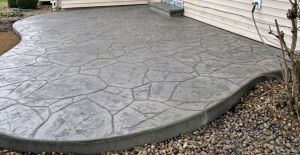
Benefits of a Poured Concrete Patio
- Low maintenance. No sealing every season like a wood deck, no re-leveling like pavers.
- Long-lasting. A properly built patio holds up for decades in our climate.
- One smooth surface. No gaps for weeds, no shifting stones, easier to keep clean.
- Design flexibility. Broom, smooth, stamped, or colored finishes.
- Good value. Usually less expensive than a deck of the same size, with less upkeep.
When to Consider a New Patio
- Add outdoor living space you don’t currently have
- Replace a rotting wood deck with something lower-maintenance
- Replace old, shifting, or weed-filled pavers
- Fix a cracked or settling existing patio
- Create a base for a fire pit, outdoor kitchen, or seating area
If your current patio is cracked or uneven, we’ll tell you whether a repair or a fresh pour makes more sense.
Patio Finish Options
Broom Finish
The most common and budget-friendly choice. A broom is dragged across the fresh surface to create fine grooves that add grip, good for wet areas and easy to keep clean.
Stamped and Decorative
Stamped concrete presses patterns into the surface to mimic stone, slate, brick, or tile. It gives a high-end look for less than natural stone, with no shifting joints.
Smooth and Colored
A smoother trowel finish or integral color can give a modern, clean look. Color can be mixed into the concrete or applied to the surface for a custom tone.
Our Concrete Patio Process
- Free on-site estimate. We measure the space, talk through finishes, and check drainage.
- Layout and grading. We mark the shape and set a slight slope so water drains away from the house.
- Base and forms. We compact the base and build forms to your chosen shape and size.
- Reinforcement. We add wire mesh or rebar to help control cracking.
- Pour and finish. We place the concrete and apply your chosen finish.
- Joints and curing. We cut control joints and explain how to care for it while it cures.
Materials and What Makes a Patio Last
A patio doesn’t carry vehicle loads like a driveway, but it still needs a proper base, adequate thickness (typically four inches), and reinforcement to resist cracking through freeze-thaw cycles. Just as important is drainage, the slab should slope slightly away from your home so water never pools on the surface or against the foundation. Control joints placed at the right spacing guide any cracking so it stays hidden and minor.
What Affects the Cost of a Concrete Patio
- Size. Larger patios cost more in materials and labor.
- Finish. A broom finish is the most affordable; stamped and colored finishes cost more.
- Site conditions. Sloped yards, poor drainage, or tricky access add prep work.
- Shape. Curves and custom shapes take more forming labor than a simple rectangle.
- Removal. Tearing out an old deck or patio adds to the job.
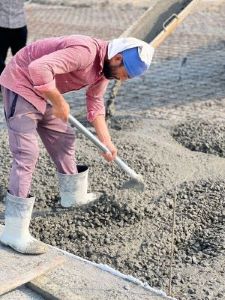
See realistic ranges in our Pricing Guide, or request a free estimate for an exact number.
Caring for Your Concrete Patio
- Keep foot traffic off for a day or two while it sets, and heavy furniture off for about a week.
- Rinse it occasionally and spot-clean spills so stains don’t set.
- Reseal every few years, especially for stamped or colored patios, to keep color and surface protected.
- In winter, skip harsh de-icing salts, which can damage the surface over time.
Common Patio Mistakes We Avoid
- No slope for drainage. A flat patio traps water and can send it toward your foundation.
- Skipping the base. Poor base prep leads to settling and cracks.
- Pouring too thin or skipping reinforcement. Both invite cracking.
- Poorly placed joints. Missing or badly spaced control joints cause random cracks.
- Rushing a stamped finish. Decorative work needs proper timing to look right and last.
Concrete Patio FAQs
How thick should a concrete patio be?
Four inches is standard for a residential patio, over a properly compacted base with reinforcement to control cracking.
How long before I can use my new patio?
You can usually walk on it within a day or two. Wait about a week before adding heavy furniture, and let it cure fully over the following weeks.
Is a concrete patio cheaper than pavers?
A poured concrete patio is often more affordable than pavers of the same size, and it needs less long-term maintenance since there are no joints to weed or re-level.
Can you match my patio to my house or landscaping?
Yes. With stamping, coloring, and finish choices, we can create a look that fits your home and yard.
Will my patio crack?
All concrete can develop hairline cracks over time. Proper base prep, thickness, reinforcement, and control joints keep any cracking minor and controlled.
Get a Free Patio Estimate
Ready to plan your backyard patio? Call 434-478-3238 or fill out the contact form for a free, no-obligation estimate and honest advice on finishes and options.
Phone: 434-478-3238 | Email: info@concretecville.com