Cracked driveway? Flaking sidewalk? A patio slab that’s settled and now holds water? Not every concrete problem means a full tear-out. Many can be repaired or resurfaced for far less than replacement, if you catch them in time.
We repair concrete for homeowners across Charlottesville and nearby towns, and we’ll give you an honest answer about whether a repair or a full replacement is the smarter move. Call 434-478-3238 for a free assessment.
Common Concrete Problems We Fix
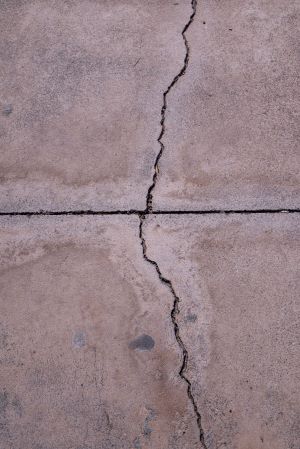
Cracks
Some cracks are cosmetic hairlines; others signal a base or drainage problem underneath. We assess how wide, deep, and active a crack is before recommending a fix, because the right repair depends on the cause.
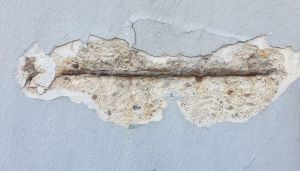
Spalling and Flaking
When the surface flakes, pits, or peels, that’s spalling, often from freeze-thaw cycles, de-icing salt, or a finishing issue when the concrete was poured. Resurfacing can restore a smooth surface without replacing the whole slab.
Uneven or Settling Slabs
When a section sinks or lifts, it creates tripping hazards and pooling water. Depending on the cause, we can often level or address the slab rather than replace it.
Worn or Stained Surfaces
Old, dull, or stained concrete can frequently be resurfaced to look fresh again, a cost-effective alternative to a full pour when the slab underneath is still sound.
Repair or Replace? How We Decide
- How deep the damage goes. Surface issues can be resurfaced. Structural failure usually can’t.
- The base underneath. If the base has failed or drainage is the real problem, patching the top won’t last, replacement fixes the root cause.
- How much is affected. A few isolated issues favor repair; widespread failure favors replacement.
- Age and value. Sometimes repair buys good years; sometimes replacement is the better long-term dollar.
If a repair will genuinely solve your problem, we’ll recommend it, even though a replacement would be a bigger job for us. That honesty is how we earn repeat customers.
Our Concrete Repair Process
- Free assessment. We look at the damage, find the likely cause, and explain your options.
- Written estimate. You get a clear quote for the recommended repair.
- Surface prep. We clean, cut out, or grind the damaged area so the repair bonds properly.
- Repair or resurface. We apply the right method for the problem.
- Finishing. We match the surface and finish as closely as possible to the surrounding concrete.
- Curing guidance. We explain how to protect the repair while it sets.
Repair Methods We Use
- Crack repair – cleaning out and filling cracks with the appropriate material based on width and movement.
- Resurfacing – applying a fresh overlay to worn or spalled surfaces to restore a smooth finish.
- Patching – rebuilding damaged edges, corners, and sections.
- Joint sealing – resealing control and expansion joints to keep water out.
- Full section replacement – replacing a failed section when a patch won’t hold.
What Causes Concrete to Fail
- Poor original base prep – the most common root cause of cracking and settling.
- Water and drainage – water under or around a slab causes movement and erosion.
- Freeze-thaw cycles – our Virginia winters expand and contract concrete repeatedly.
- De-icing salts – accelerate surface spalling and flaking.
- Missing or failed joints – lead to random, uncontrolled cracking.
- Tree roots and soil movement – can lift and crack slabs over time.
What Affects the Cost of Concrete Repair
- Type of damage. A simple crack fill costs far less than resurfacing or section replacement.
- Size of the area. Larger repairs use more material and labor.
- Accessibility. Hard-to-reach areas take more time.
- Underlying cause. Fixing drainage or base issues adds to the scope but prevents repeat damage.
- Finish matching. Matching decorative or colored surfaces takes extra work.
See our Pricing Guide for realistic ranges, or request a free assessment. (Link to: Pricing Guide and Contact pages)
How to Make Repairs Last
- Fix the cause, not just the symptom – especially drainage.
- Keep water directed away from slabs and foundations.
- Reseal surfaces and joints on schedule.
- Avoid harsh de-icing salts in winter.
- Address small cracks early before water gets in and makes them worse.
Common Repair Mistakes We Avoid
- Patching over a base problem. A cosmetic fix over a failed base fails again fast.
- Ignoring drainage. If water caused the damage, the repair won’t hold unless water is redirected.
- Wrong filler for the crack. Active cracks need flexible materials; the wrong choice cracks again.
- Skipping surface prep. Repairs that aren’t bonded to clean concrete peel away.
- Overselling replacement. We don’t push a full pour when a repair will do.
Concrete Repair FAQs
Can a cracked driveway be repaired, or does it need replacing?
It depends on the crack’s cause and severity. Surface cracks can often be repaired; widespread or structural cracking from a failed base usually means replacement. We’ll assess it and tell you honestly.
What is concrete resurfacing?
Resurfacing applies a thin overlay over sound but worn or spalled concrete, restoring a smooth surface without replacing the slab — a cost-effective option when the base is still good.
Why is my concrete flaking on the surface?
That’s spalling, usually caused by freeze-thaw cycles, de-icing salts, or finishing issues. Resurfacing can often restore it.
Will a repair be visible?
We match the surrounding surface and finish as closely as possible, but some repairs may be slightly visible. Resurfacing can give a more uniform look across an area.
How long do concrete repairs last?
When the underlying cause is addressed, repairs can last many years. If the cause is ignored, damage tends to return — which is why we fix the root problem, not just the surface.
Get a Free Concrete Repair Estimate
Got cracked, flaking, or uneven concrete? Call 434-478-3238 or fill out the contact form for a free assessment and an honest recommendation, repair or replace, whichever truly makes sense.
Phone: 434-478-3238 | Email: info@concretecville.com