Concrete Driveways in Charlottesville, VA
A concrete driveway is one of the best long-term investments you can make in your property. Done right, it can last 30 years or more, handle daily vehicle traffic, and keep looking clean with very little upkeep. Done wrong, it cracks, settles, and becomes an eyesore within a few years.
We pour new concrete driveways and replace failing ones for homeowners across Charlottesville and nearby towns. Below is what actually goes into a driveway that holds up, so you know what to look for, whether you hire us or someone else.
Call 434-478-3238 for a free driveway estimate.
What Goes Into a Concrete Driveway That Lasts
A driveway carries real weight, cars, trucks, sometimes delivery vehicles, day after day, through hot summers and freezing winters. Three things determine how well it holds up: the base beneath it, the thickness of the slab, and the reinforcement inside it.
The base is the foundation. We grade the ground for proper drainage, then lay and compact a gravel base that spreads the load and keeps water from pooling underneath. A driveway poured over soft or uneven ground will crack no matter how good the concrete is.
Thickness matters too. A standard residential driveway should be at least four inches thick, and we go thicker where heavier vehicles are involved. Combined with steel reinforcement and properly placed control joints, that’s what keeps a driveway solid for decades.
Benefits of a Concrete Driveway
- Long lifespan. A well-built concrete driveway commonly lasts 30 years or more with basic care.
- Low maintenance. No annual sealcoating like asphalt. An occasional cleaning and a sealer every few years is usually enough.
- Strong and stable. Concrete handles heavy loads without rutting or softening in summer heat.
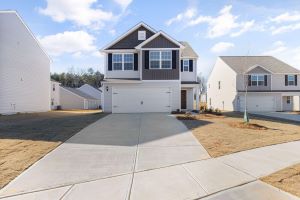
- Clean look. A concrete driveway brightens the front of a home and boosts curb appeal.
- Finish options. Broom finish for grip, or a decorative stamped border if you want something more custom.
When to Replace vs. Repair Your Driveway
Not every worn driveway needs to be torn out. A few cracks or minor surface wear can often be repaired or resurfaced. But there are signs that replacement is the smarter move:
- Large or deep cracks across multiple sections
- Sections that have settled or heaved unevenly
- Crumbling or flaking (spalling) across the surface
- Drainage problems that keep causing damage
- A driveway that’s simply reached the end of its life
We’ll look at your driveway honestly and tell you which makes more sense. If a repair buys you several good years, we’ll say so.
Our Concrete Driveway Process
- Free on-site estimate. We measure the area, check drainage and access, and give you a written quote.
- Removal. If we’re replacing an old driveway, we break out and haul away the existing surface.
- Grading and base. We set the correct slope for drainage and compact a solid gravel base.
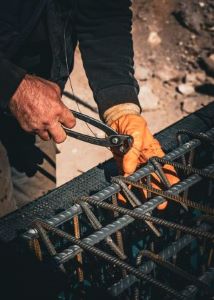
- Forming and reinforcement. We build forms to shape and slope, then add rebar or wire mesh.
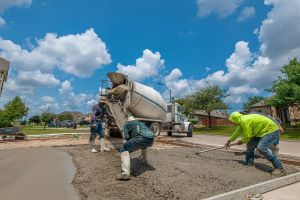
- Pour and finish. We place the concrete, level it, and apply your chosen finish.
- Control joints and curing. We cut joints to control cracking and explain how to protect the driveway while it cures.
Materials and Thickness That Matter
For driveways we use a concrete mix rated for vehicle loads, not the weaker mix that’s fine for a garden path. Standard residential driveways are poured at four inches; we increase thickness for RVs, trucks, or heavier use. Reinforcement, rebar or wire mesh, ties the slab together and limits how far any crack can travel. Control joints, cut at planned intervals, give the concrete a place to crack cleanly instead of randomly across the surface.
What Affects the Cost of a Concrete Driveway
- Size. More square footage means more materials and labor.
- Thickness and reinforcement. Heavier-duty driveways cost more but last longer.
- Removal. Tearing out an old driveway adds labor and disposal.
- Site conditions. Poor drainage, slopes, or difficult access take extra prep.
- Finish. A plain broom finish costs less than stamped or decorative work.
- Permits. Some jobs, especially those touching the street apron, may require a permit.
For a breakdown of realistic price ranges, see our Pricing Guide. For an exact number, request a free estimate.
Caring for Your New Driveway
- Keep vehicles off it for about seven days after the pour while it gains strength.
- Rinse off oil, gas, and de-icing salts, which can damage the surface over time.
- Avoid harsh de-icers in winter; sand gives traction without eating the concrete.
- Reseal every few years to protect against moisture and freeze-thaw damage.
Common Driveway Mistakes We Avoid
- Skipping proper base prep. The number-one cause of early cracking and settling.
- Pouring too thin. A cheap, thin slab won’t hold up to vehicle weight.
- Leaving out reinforcement. Skipping rebar or mesh saves money now and costs you later.
- Missing or poorly placed control joints. Without them, concrete cracks wherever it wants.
- Poor drainage. Water that pools or runs under the slab shortens its life dramatically.
Concrete Driveway FAQs
How thick should a concrete driveway be?
At least four inches for standard cars, and thicker for heavier vehicles. Proper thickness plus reinforcement is what prevents cracking under load.
How long before I can drive on a new concrete driveway?
Usually about seven days. It’s safe to walk on within a day or two, but vehicles need the slab to gain enough strength first. It continues curing for about a month.
How long does a concrete driveway last?
With proper installation and basic care, 30 years or more is common in our area.
Is concrete better than asphalt for a driveway?
Concrete lasts longer and needs less maintenance, though it costs more upfront. Asphalt is cheaper to install but needs regular sealcoating and doesn’t last as long.
Do you remove the old driveway?
Yes. If we’re replacing an existing driveway, removal and disposal are part of the job.
Get a Free Driveway Estimate
Planning a new driveway or ready to replace a cracked one? Call 434-478-3238 or fill out the contact form for a free, no-obligation estimate and honest advice.
Phone: 434-478-3238 | Email: info@concretecville.com